Grim Milestone as U.S. Debt Crosses $40 Trillion
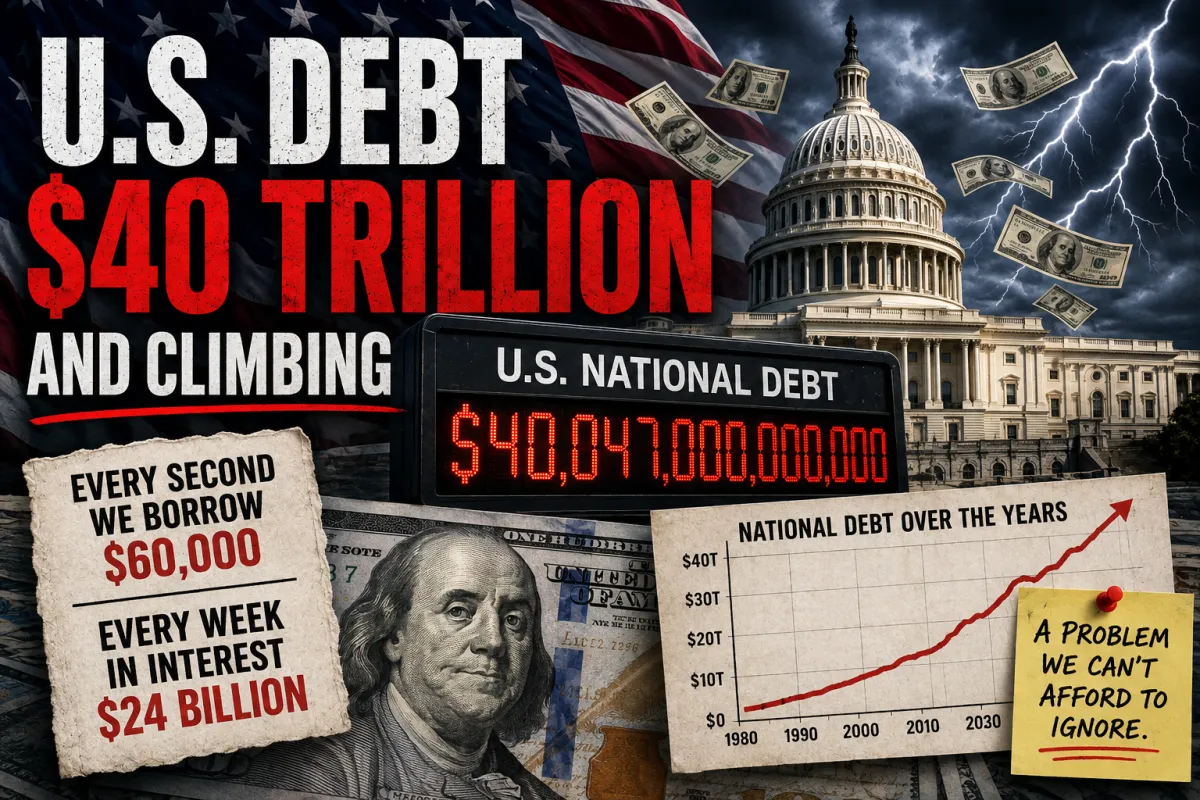
The growing U.S. debt problem is something not talked about frequently enough. Every second that passes, the U.S. borrows another $60,000. If that isn’t scary, every week that passes, we face another $24 billion in interest. We have an ever-worsening fiscal position. And no one in Washington wants to talk about it.
Two weeks ago, former U.S. Ambassador Nikki Haley warned that we were about to cross a grim milestone with a $40 trillion debt. At that time, we were at $39.94 trillion in debt. She accused politicians of ignoring one of the biggest threats facing young Americans today. Sadly, those words went largely unheeded as we have now crossed the line at $40 trillion in debt.
On August 18, 2026, America topped $40.047 trillion in debt. In the last decade, the federal government’s IOU has more than doubled. When President Donald Trump was sworn into office for the first time back in 2017, the federal debt was $19.95 trillion.
Where Did This Excessive Debt Come From?
You could point to a couple of different things that contributed, but one of the biggest recent ones was the COVID-19 pandemic, which increased it by $7 trillion. The borrowing under the Biden administration was also out of control. During his single term in office, he added $8.4 trillion in debt from $27.8 trillion to $36.2 trillion by the time he left office.
During the Biden administration, some of the key debt increases included:
COVID-19 Relief: The American Rescue Plan included $2.1 trillion and was passed in early 2021 and extended as part of the pandemic relief.
Major Legislation: There were bipartisan and administration-backed initiatives that added to the debt. This included things like clean energy subsidies, infrastructure spending, and the CHIPS Act.
Rising Interest Rates: The rising interest rates and compounding also greatly added to the federal debt.
The Committee for a Responsible Federal Budget said that Biden approved roughly $4.7 trillion to the new 10-year debt projection. The rest of the debt came from legislative costs and mandatory spending on entitlement programs.
When we look at the key debt increases under the Trump administration, these included:
COVID-19 Relief: About half of the debt during Trump's first term came from COVID-19 relief packages. This included the CARES Act and the Paycheck Protection Program.
Tax Cuts: During his first term, President Trump passed the Tax Cuts and Jobs Act of 2017. This reduced federal revenue and added $2.5 trillion to the 10-year debt.
Bipartisan Spending: Both parties agreed to increase the budget for defense and domestic programs.
During Trump’s first term, he increased the national debt by 39%. Roughly one-third of what he spent was for the pandemic. In his second term, it has increased by 14.1% since mid 2026.
Is a Debt Crisis on the Horizon?
With everything said, it begs the question: Will we find ourselves in a full-blown debt crisis if legislators fail to act? At some point, legislators will need to confront the unsustainable fiscal outlook. That means raising taxes, cutting back on spending, or doing both.
Right now, our federal programs spend more than they take in. We have those items running on autopilot, and we need to grab the steering wheel again. If we fail to address the national debt, it will raise the cost of living, smother investment and spending, and it will threaten the long-term prosperity of Americans.
Having a $40 trillion debt can be felt throughout the economy and hurts people’s pocketbooks. It comes out one way or another. For example, it could come out in taxes, it could come out in tax shifts, it could come out in inflation or higher borrowing costs. It can also slow economic productivity.
That’s why some people are wondering if we may find ourselves in a debt crisis before long. It has made markets more nervous, but no one knows what could happen. Most people who see it agree that we need to address this problem.
What Do You Think?
At Trucker Social, we would love to hear what you think about the ever-climbing national debt. It has been going on for years, even before Trump and Biden. Most believe that the issue started 40 years ago in the 1980s when it tripled and crossed the $1 trillion mark.
Many economists predict that by 2030, we could hit $50 trillion in debt. How long do you think this can continue? What do you think about this, and how should we address it? Leave us a comment below and let us know your thoughts.