Truckers: Traveling across State Lines with a Gun is Harder Than You Think
When you’re a trucker and you have a license to carry, you face dangers that others don’t, from late-night deliveries at dimly lit docks to long stretches of isolated highway. Some choose to get a dog that can alert and protect them from danger. Others choose to carry a firearm.
Truckers who want the right to carry, even when you have a license in your home state, face unique challenges that many others don’t. This assumes you do over-the-road trucking and you need to pass through multiple states because every state has unique firearms laws.
Some are more restrictive than others, and that can run you into trouble if you’re not careful. As a legal disclaimer, at Trucker Social, we are not lawyers; we're truckers, and none of this should be misconstrued as legal advice, but we’d like to raise awareness for truckers about the legal risks of carrying a firearm across state lines.
Where the Danger Comes From
The biggest challenge of carrying a firearm as a trucker isn’t the firearm itself. As a CDL driver, wherever you travel, you need to stay compliant. This means dealing with carrier-specific rules, insurance issues, and your legality when you cross multiple states.
When it comes to legality, you have a right to carry a firearm, but the danger comes from how the state laws may differ. You could be coming from a state with more relaxed gun laws like Texas or Utah, but when you pass through a state like New York or New Jersey, you must follow the stricter gun laws of that state.
And you might not even know what those laws are!
Especially when you pass through dozens of states as an OTR trucker, you will struggle to keep up with those laws.
The FMCSA does not restrict any trucker from carrying firearms, but you need to know how to do it safely. Sadly, it comes with its risks, regardless. Let’s look at a couple of the federal laws that would apply if you’re a trucker.
Firearm Owner Protection Act (FOPA)
Lawful gun owners, including truckers, can transport firearms across state lines if they’re unloaded and stored in a locked container with the ammunition in a separate container. The issue is that this law no longer covers you if you have your gun loaded, accessible, or plan to use it for self-defense rather than transportation
What you need to understand is that carrying for self-defense is different from the FOPA law.
Big Differences across States
If you only drive intrastate, you could probably get away with it if you live in a state like Texas, Florida, Utah, Tennessee, Mississippi, or West Virginia. Just make sure you know the gun laws of your state or consult with a qualified lawyer first.
States like New York, California, Illinois, and Washington may even prohibit you from carrying a loaded firearm, or they may require you to have a specific concealed-carry permit. They might also impose complex transport rules.
An example is if you’re coming from a state like Florida and you go to Illinois: you can carry a gun legally in Florida, but Illinois has stricter laws. They do not allow you to carry a loaded firearm in a commercial vehicle unless you have an Illinois license.
When your job is OTR trucking, you might deal with stricter gun law states at some point. Many states, through reciprocity agreements, will recognize an out-of-state concealed carry permit, but not all of them do.
Beware of Gun-Free Zones
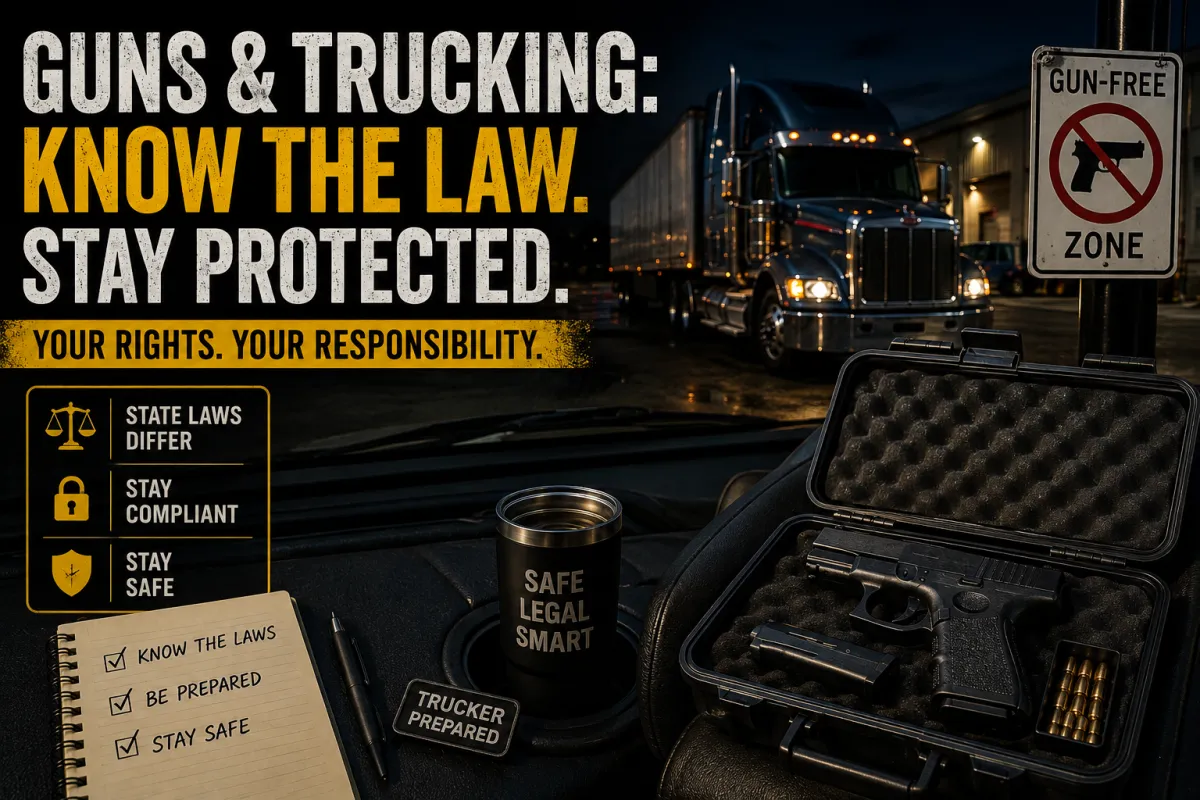
There’s another danger we’d like to highlight, and it exists even in the most relaxed states for gun laws. That danger is with gun-free zones. Truckers face a risk that they would unintentionally enter a restricted area with a firearm, which is a felony.
Places like schools, hospitals (in some states), military bases, secured industrial zones, and some federal properties may run you into legal trouble. Regardless of state law, these places don’t allow anyone to possess a firearm.
What if You Want to Carry a Firearm?
There are truckers who carry a firearm in their truck for protection, but it requires careful consideration. Doing an intrastate or regional trucking job might also be a better choice because you can acquaint yourself better with the state laws.
Giving it some careful thought is extremely important. To ensure you stay safe legally, the things you want to consider include:
Leave firearms at home on a route to Mexico or Canada.
Keep your firearm safety training and certification on you.
Separate your ammunition from your gun, both in locked containers.
Keep the gun unloaded when traveling.
Do You Carry a Gun for Protection?
What are your thoughts on carrying a firearm in trucking? Do you think the legal risks of doing this are worth it? For some, the extra safety when out on the road and the peace of mind is worth it, but it can be a big hassle when you pass through many states.
Let us know in the comments how you feel about gun laws in trucking because we’d love to hear your thoughts, and we’ll have an active discussion about the gun laws and how they impact truckers.