How to Spot Scams in Trucking Job Ads and Owner-Operator Offers
If you're searching for a trucking job, it's important to know how to recognize trucking job scams before you provide personal information, send money, or sign a contract.
Most trucking companies and job opportunities are legitimate. However, fake trucking jobs, fraudulent trucking companies, misleading lease programs, and other trucking scams do exist. These scams can cost you valuable time and money. In some cases, it exposes sensitive personal information.
Whether you're an experienced driver, a new CDL holder, or an owner-operator looking for your next opportunity, knowing the warning signs can help you protect yourself.
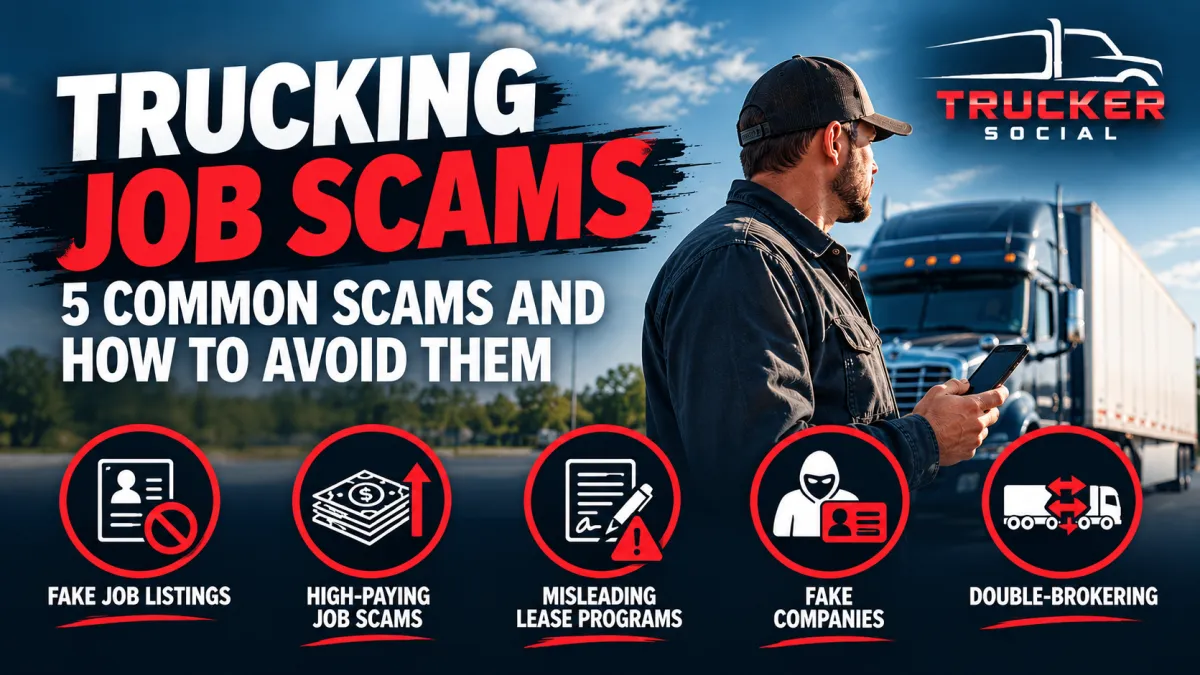
Here are five common trucking job scams to watch for and what you can do to avoid them.
1. Fake Trucking Job Listings
When it comes to trucking job scams, fake job listings are one of the most common ones. Scammers may post non-existent trucking jobs on online job boards or other websites to attract drivers. You can also encounter truck driver job scams on Facebook, somewhere you’d think you were safe.
The goal may be to collect personal information, steal your identity, or convince you to pay an upfront fee. In some cases, the scammer collects the information or payment and then claims they filled the job position.
How to spot a fake trucking job
Be cautious if a trucking job:
Promises unusually high pay with few qualifications.
Requires little or no interview.
Asks for sensitive personal information immediately.
Requests an application, onboarding, training, or processing fee.
Uses an email address that doesn't match the company's official website.
Doesn't appear on the company's official careers page.
Before applying for a trucking job, independently visit the company's official website and verify that the position exists.
You should also verify that emails and contact information actually belong to the company.
Never pay someone simply to get a trucking job.
2. “Guaranteed” High-Paying Trucking Jobs
Finding a high-paying trucking job is possible, but drivers should be cautious when a company makes unrealistic promises about compensation.
You might see a trucking company advertise extremely high rates, large sign-up bonuses, or guaranteed earnings to attract applicants. After a driver signs up, however, the actual compensation may be much different from what was originally advertised.
This is one reason it's important to understand exactly how a trucking company's pay structure works before accepting a position.
How to avoid trucking job pay scams
Before accepting an offer:
Research the trucking company.
Read reviews from current and former drivers.
Compare the advertised compensation with other trucking jobs.
Ask whether the advertised rate has specific conditions.
Get compensation terms in writing.
Ask for references from current or former drivers.
Speaking directly with other drivers can provide useful insight into whether a company delivers on the promises made during recruitment.
If a trucking job sounds better than everything else you've found, take the time to verify the details before committing.
3. Misleading Owner-Operator Lease Programs
Owner-operator scams can take a different form. A lease-purchase or truck leasing program that appears attractive because of advertised rates, schedules, or low upfront costs can turn out totally different later.
The potential problem is that the actual cost of the program may not be clear at first.
Hidden fees, maintenance expenses, insurance costs, deductions, and other charges can significantly affect an owner-operator's take-home earnings. Long-term contracts can also make it difficult or expensive to leave the program.
How to avoid owner-operator lease scams
Before signing a lease or lease-purchase agreement:
Review every fee and deduction.
Understand how payments are calculated.
Ask about maintenance and repair responsibilities.
Determine who pays for insurance and other operating expenses.
Review the contract's termination provisions.
Ask other owner-operators about their experience.
Get important promises in writing.
Don't evaluate an owner-operator opportunity based solely on the advertised gross revenue. Understand the actual costs and potential take-home pay before signing a contract.
4. Fraudulent Trucking Companies
Another common trucking company scam is where criminals create a fake trucking company that appears to be one of the legitimate carriers or recruiters.
These scammers may create professional-looking websites, social media profiles, job advertisements, or even fake business addresses to appear credible.
Once they establish contact with a driver, they may request sensitive information like Social Security numbers, banking information, or a driving license.
That information can potentially be used to steal your identity.
How to verify a trucking company
Before providing sensitive information, independently verify the company.
The FMCSA SAFER System can be used to check information associated with registered motor carriers. Look for the company's USDOT number and MC number, and make sure the information matches the company you're actually communicating with.
Pay attention to inconsistencies related to:
Company names
USDOT numbers
MC numbers
Addresses
Phone numbers
Email addresses
Registration information
If the information doesn't match, stop and investigate before providing more information.
5. Double-Brokering Scams
Double-brokering is another trucking industry scam that can leave carriers responsible for a load without receiving the expected payment.
In a double-brokering situation, a load may be improperly re-brokered to another carrier without the appropriate authority or disclosure.
A carrier may accept the load believing they're working directly with an authorized broker. After delivering the shipment, however, they may discover that the person who arranged the load wasn't authorized to broker it.
The carrier can then face a difficult situation where the load has been delivered, but payment is disputed or never arrives.
How to protect yourself from double-brokering
Before accepting a load, carefully verify the companies and individuals involved.
Check the available FMCSA Registration System and compare the details across your documents.
Look for things that don’t match up like:
Broker and carrier names
MC numbers
Contact information
Email addresses
Rate confirmations
Pickup and delivery information
Other paperwork associated with the shipment
Mismatched information can be a big red flag. If something doesn't look right, investigate it before accepting the load.
Browse Verified Trucking Jobs on Trucker Social
One of the biggest issues that will lead to trucking job scams is that the jobs weren’t verified. Do you want to waste your time on jobs that aren’t even legitimate? At Trucker Social, we verify all the jobs on our platform. You can browse verified jobs when you sign up for a Trucker Social profile. Even if one does slip past us, you can report suspicious listings, and we’ll handle it right away to ensure integrity on the platform.