How Owner-Operators Find Consistent Freight
You just opened your trucking business as an owner-operator. The problem is, you didn’t realize you’d have to get your own loads. You’re wondering how to get loads as an owner operator. The average owner-operator spends anywhere from a few hours to a couple of days finding loads, and if you’re new it can be rough.
However, I’m going to tell you one thing: keep going. You’ll get better at it as you get experience. Typically, you can expect it to take anywhere from 30 to 90 days to establish a rhythm. It takes time, but once you get the hang of it, it’ll get easier.
Keep reading because we’re going to cover everything you need to know about how to find loads as an owner-operator and what to expect.
1. Pick Your Freight Broker
The freight broker is someone who serves as the middleman between shippers. Here’s what they do in a nutshell: The broker deals with the shipper who needs goods transported via freight (i.e. the person you need).
Next, the broker negotiates with the carrier (i.e. you), calling in trusted truck drivers they worked with in the past about loads.
Now, depending on the broker, you’ll wind up paying anywhere from 10% to 35% of your load to the broker if you choose this route. They might, for example, negotiate with the shipper for $2,500. They’ll take $400 for themselves and give you $2,100.
Good freight brokers can save you tons of time picking up freight with you sometimes getting instant access to freight.
Brokers also manage the invoicing and make sure you get paid even if the shipper is slow in paying. One of the nice things about this as well is that it lowers how many empty miles you have to do, also known as running without a load.
2. Direct Working with Shippers
Let’s say you’d rather keep all the money. Profit margins in trucking are bare enough. You can and do have a right to cut out the broker and go right to the source. While it may take more time, you may find it better in the long term because you walk away with more money. When you negotiate $2,500 for a load, you get the whole thing.
Now, there’s one downside to this: You’ll need to do cold calling. However, this is a good long-term strategy for building a strong and successful trucking business.
After you deliver that first load with dependability, they will likely call you for more loads, giving you ongoing work.
Cold calling is only one method. I know of other people who choose to join industry associations because it makes them more visible. Others choose to do networking. How you market yourself to shippers is up to you.
Related article: Owner-Operator Pay: Gross Revenue vs. Take-Home Pay
3. Work Doing Government Contracting
You often receive steady long-term work if you bid on government contracts. The way you get these is you have to look for federal, state, or local government contracts paying owner-operators. Now, if you want to go this route, you will need to register to do government contracting.
However, it’s quite simple to get started. One thing to know about going this route is that government contracts tend to have a lot of competition.
4. Hop on a Load Board
The biggest load boards will offer thousands of loads to choose from. In fact, DAT One boasts having over 644,000 to 722,500 loads every single day. If you hop on at the load board called Truckstop, they have anywhere from 250,000 to 600,000+ daily loads.
You can find freight of every kind, but DAT One is considered the gold standard when it comes to dry van, heavy flatbed freight, or reefer. On the other hand, Truckstop is great for flatbed, heavy-haul, step-deck, and LTL equipment.
Other less traditional routes include Amazon Relay, which sees about 15,000 to 25,000+ daily loads, and Uber Freight, which doesn’t publicly publish how many loads per day, but they manage between $17 billion to $18 billion worth of freight every year.
5. Hire a Freight Dispatcher
This is great one if you’re looking for how to get loads as a new owner operator. You can either hire a freight dispatcher, or you can use a dispatch service. An advantage of this route is that they often connect you with shippers more willing to work with a new owner-operator. Finding brokers willing to work with a new MC under 90 days old is hard. Dispatchers tend to know how to do it. Dispatchers are often also more willing to fight for the extra $200 to $300 per load since they have a vested interest.
They negotiate the rates and ensure that both sides agree to the terms. Typically, you can expect to pay anywhere from 5% to 10% for each load. Some dispatchers will charge per load, whereas others will charge a flat rate per week.
Related article: How to Become an Owner-Operator: A Practical Start-to-Finish Guide
6. Lease with a Company
Probably one of the easiest ways to get a load is to lease with a company. However, it’ll cost you more than the other routes. You’ll also be limited to their group of clients that they work with. You will be under contract, and can’t build something for yourself.
Leasing also has another advantage in that they pay you every two weeks instead of per month. Along with that, most of the paperwork when you lease on with a company will already have been completed for you, saving you more time.
Which Choice is Best for You?
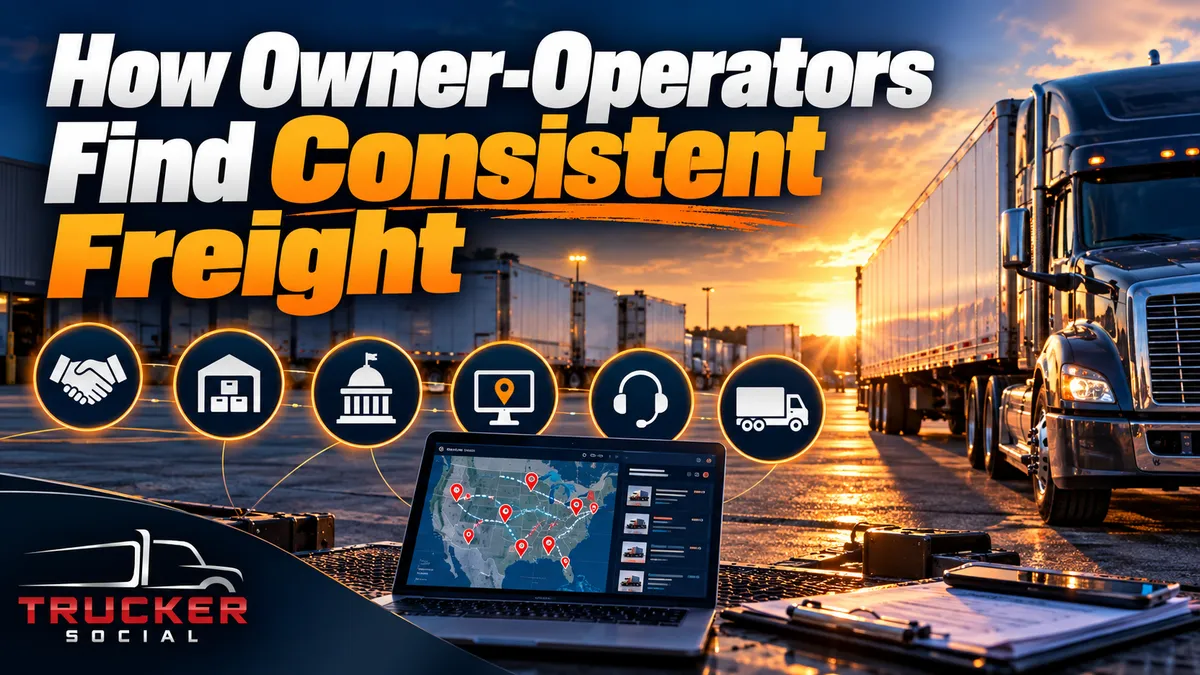
We’re going to create a quick overview of each option for finding freight to help you decide which one makes the most sense. In some cases, you may want to try multiple methods to see what works best for you:
Ways to Find Freight | Advantages | Disadvantages |
Pick a Freight Broker | Saves you tons of time and you get paid even if the shipper is slow at paying. | You have to sacrifice anywhere from 10% to 15% of your profit margins with this route. |
Direct Working with Shippers | You keep all the profit and can focus on building the strong foundations of a business. | It takes time to find loads, and you may need to spend a lot of time cold calling to establish contracts. |
Work as a Government Contractor | Consistent and steady work that will keep you running on the road and getting paid. | Requires one extra step with registering, and it can be highly competitive. |
Hop on a Load Board | Tons of freight available making it easy to find consistent work. | Rates go to the lowest bidder and risk of fraud and double brokering. |
Hire a Freight Dispatcher | Helps you find loads fast, and they can find you brokers willing to work with you. | Need to sacrifice 5% to 10% of your profit margins on each load. |
Lease with a Company | One of the fastest ways to get loads. | You also wind up paying a lot of your profits to the company you lease with, more than the other ways of finding freight. |
Connect with Carriers and Dispatch Providers
Hopefully, that answers the question, “How do owner operators get loads?” If you would like the chance to network with carriers and dispatch providers, you would invite you to check out the community at Trucker Social. Create your profile and start networking with other people who might be able to help you in your journey as an owner-operator. You can also post to our Job Board to pull from a pool of experienced truckers. Sign up today and see everything you can do on our platform!